
الهاتف 0751-402-9131
البريد الالكتروني: info@jnpiraq.info
Address: Iraq-Erbil

English /Arabic
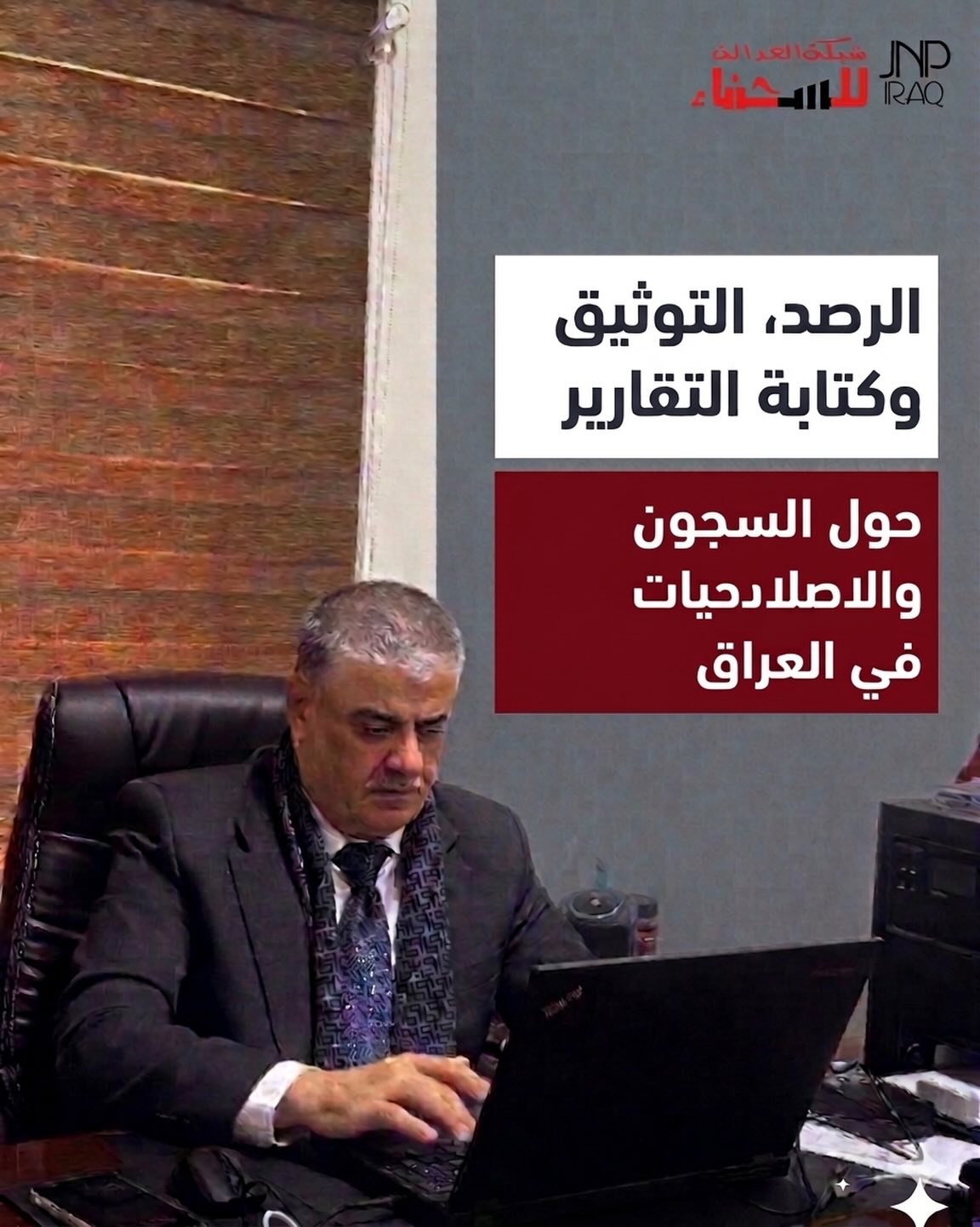
Shwan Saber to ” Justice Network for Prisoners in Iraq”: Civil society monitors, documents, and writes reports on prisons and Reformatories in Iraq…
Baghdad / Erbil – Prisoner Justice Network
In an exclusive interview conducted by our Network’s media department with him on March 31, 2026, human rights activist Shwan Saber, Chairman of the Board of Directors of the Justice Network for Prisoners, affirmed that the role of civil society in monitoring, observing, and documenting within Reformatories and prisons is a complementary role to the oversight bodies belonging to the three authorities (legislative, judicial, and executive) in Iraq. He stated that this role is not limited to prisons alone but extends to encompass the overall political, economic, social, and judicial situations, etc.
Saber said during the interview: “The primary role carried out by official oversight bodies in Iraq, through the Iraqi Council of Representatives and the Kurdistan Region of Iraq Parliament, the Inspector General’s Office – noting that there is no equivalent to the Inspector General’s Office in the Region – and the Public Prosecution Presidencies in Iraq and the Kurdistan Region of Iraq. There are also other bodies that conduct monitoring and inspection, such as the Independent High Commission for Human Rights in Iraq and its counterpart in the Region, the Independent Human Rights Commission.
These bodies represent the three authorities and are tasked with oversight and inspection according to the laws governing their work. The legislative authority has an oversight function. The Law on Reform of Inmates and Detainees No. 14 of 2018 and Regulation No. (1) of 2008 specific to the Kurdistan Region of Iraq assigned the task of inspection and monitoring to the executive authority. The Public Prosecution Laws No. 49 of 2017 for Iraq and Law No. 159 of 1979 for the Region, as well as the laws of the Independent Commission and the Independent Body, also indicated the task of monitoring and inspection in prisons and correctional facilities. These laws also imposed on those bodies the duty of monitoring as part of their work. They do not only monitor prisons, correctional facilities, and places of detention but also monitor human rights files and the proper application of laws wherever they may be in Iraq.”
The Chairman of the Board of Directors of the Justice Network for Prisoners clarified that there are entities complementing the work of these oversight bodies, such as the media, local and international non-governmental organizations, and other committees formed from multiple parties. He stressed that “it is very natural for civil society to have a monitoring role, not only in prisons but across the overall political, economic, social, security, legal, and judicial situations.”
Saber explained the nature of this role, saying: “The aforementioned oversight bodies monitor the legality of procedures, decisions, administrative matters, and even judicial matters, and the extent to which they align with international standards, the proper application of laws and decisions issued by higher authorities by administrations in general. We, as non-governmental organizations, our networks, and our coalitions, play the role of monitoring the constitutionality of issued laws, their alignment with international standards and Iraq’s international obligations, and the extent of implementation of international decisions and recommendations, especially those issued by member states of the Human Rights Council, specifically the international recommendations issued by that council in the years 2010, 2014, 2019, and 2025.
We should never forget to mention the important role of the ministries supervising prisons and correctional facilities in facilitating the tasks of the Justice Network for Prisonersk and its member organizations in their duties, foremost among them the Ministry of Justice in the Iraqi government and the Ministry of Labor and Social Affairs in the Kurdistan Regional Government of Iraq, regarding facilitating procedures, granting approvals, holding continuous meetings with our network, and working on the network’s recommendations through the annual reports issued by the network and investigative reports as well.”
It is worth mentioning that the Justice Network for Prisoners continues its efforts in monitoring the conditions of inmates in Reformatories and prisons, working to enhance the principle of transparency and human rights according to legal and international standards. We affirm that (our goal is to contribute to improving human rights conditions in prisons and Reformatories, not to offend the administrations).
شوان صابر لـ”شبكة العدالة للسجناء في العراق”: المجتمع المدني.. ترصد و توثيق و تكتب التقارير عن السجون و الاصلاحيات في العراق …
بغداد / أربيل – شبكة العدالة للسجناء
في لقاء خاص أجراه قسم الاعلام في شبكتنا معه بتاريخ 31 آذار 2026، أكد الحقوقي شوان صابر، رئيس مجلس إدارة شبكة العدالة للسجناء، أن دور المجتمع المدني في الرقابة والرصد و التوثيق داخل الإصلاحيات والسجون هو دورتكميلي للاجهزة الرقابية التابعة للسلطات الثلاث ( التشريعي و القضائي و التنفيذي ) في العراق ، و لا يقتصر على السجون فقط، بل يمتد ليشمل مجمل الأوضاع السياسية والاقتصادية والاجتماعية والقضائية … الخ .
وقال صابر في اللقاء: “الدور الرئيسي الذي تمارسه الجهات الرقابية الرسمية في العراق من خلال مجلس النواب العراقي و برلمان اقليم كوردستان العراق، و دائرة المفتش العام – مع الإشارة إلى أنه ليس هناك ما يماثل دائرة المفتش العام في الإقليم – ورئاسات الادعاء العام في العراق و اقليم كوردستان العراق، أيضاً هناك جهات أخرى، تقوم بالرقابة و التفتيش مثل المفوضية المستقلة لحقوق الإنسان في العراق ونظيرتها في الاقليم هي الهيئة المستقلة لحقوق الإنسان .
هؤلاء الجهات يمثلون السلطات الثلاث و مكلفون بأعمال الرقابة و التفتيش بموجب القوانين التي تحكم اعمالهم ، فالسلطة التشريعية لها صفة المراقبة ، و قانون أصلاح النزلاء و المودعين رقم 14 لسنة 2018 و النظام رقم ( 1 ) لسنة 2008 خاص بأقليم كوردستان العراق اعطوا مهمة التفتيش و المراقبة للسلطة التنفيذية و قانوني الادعاء العام رقم 49 لعام 2017 الخاص بالعراق و قانون رقم 159 لسنة 1979 الخاص بالاقليم ، قانوني المفوضية و الهيئة المستقلة ايضا اشارا الى مهمة الرقابة و التفتيش في السجون و الاصلاحيات، ايضا القوانين هي فرضت على تلك الجهات القيام بمهام المراقبة كجزء من اعمالهم ، و هم لا يراقبون السجون و الاصلاحيات و اماكن الاحتجاز فقط ، بل يراقبون ملفات حقوق الانسان و حسن تطبيق القوانين اينما كانت في العراق .
وأوضح رئيس مجلس ادارة شبكة العدالة للسجناء أن هناك ما يكمل دور هذه الأجهزة الرقابية، مثل الإعلام، والمنظمات غير الحكومية المحلية والدولية، ولجان أخرى تشكل من عدة جهات، مشدداً على أن “مسألة طبيعية جداً أن يكون للمجتمع المدني دور رقابي، ليس فقط في السجون، وإنما في مجمل الأوضاع السياسية والاقتصادية والاجتماعية والأمنية والقانونية والقضائية”.
وبيّن صابر طبيعة هذا الدور قائلاً: ” الجهات الرقابية السالفة الذكر ، يقومون بمراقبة مدى قانونية الاجراءات و القرارات و الاموار الادارية و حتى القضائية و مدى موائمتها بالمعايير الدولية و حسن تطبيق القوانين و القرارات الصادرة من الجهات العليا من قبل الادارات بصورة عامة ، و نحن بدورنا كمنظمات غير حكومية و شبكاتنا و تحالفاتنا نقوم بدور الرقابة على دستورية القوانين الصادرة و مدى موائمتها مع المعايير الدولية و التزامات العراق الدولية و مدى تنفيذ القرارات و التوصيات الدولية ، خاصة الصادرة من الدول الاعضاء في مجلس حقوق الانسان و نخص بالذكر التوصيات الدولية التي صدرت من المجلس المذكور في الاعوام 2010 و 2014 و 2019 و 2025 .
و ننسى دومآ ان نذكر الدور المهم للوزارات التي تقوم بالاشراف على السجون و الاصلاحيات بتسهيل مهام شبكة العدالة للسجناء و المنظمات الاعضاء فيها في مهامهم و في مقدمتهم وزارتي العدل في الحكومة العراقية و وزارة العمل و الشؤون الاجتماعية في حكومة اقليم كوردستان العراق، بخصوص تسهيل الاجراءات و اعطاء الموافقات و عقد لقاءات مستمرة مع شبكتنا و العمل على توصيات الشبكة من خلال التقارير السنوية التي تصدرها الشبكة و التقارير الاستقصائية ايضا.
يذكر أن شبكة العدالة للسجناء تواصل جهودها في مجال الرقابة على أوضاع نزلاء الإصلاحيات والسجون، والعمل على تعزيز مبدأ الشفافية وحقوق الإنسان وفق المعايير القانونية والدولية و نؤكد على ان ( غايتنا الاسهام في تحسين اوضاع حقوق الانسان في السجون و الاصلاحيات و ليس الاساءة الى الادارات ) .

 Arabic
  English