
الهاتف 0751-402-9131
البريد الالكتروني: info@jnpiraq.info
Address: Iraq-Erbil

English /Arabic
Education and upbringing play a very important role in building civilized societies and nurturing generations specialized in various fields of life, including medicine, engineering, law, arts, and other social sciences. Education has become a measure for assessing the progress and development of societies. For these reasons, education and upbringing are considered a crucial aspect of reformative, rehabilitative, and community reintegration programs for those involved in criminal acts. Prisons and Reformatories, through social researchers working in these institutions, prioritize education and upbringing within their reformative programs when rehabilitating convicted offenders, aiming to rebuild them and return them to society as useful and effective individuals.
The Iraqi Ministry of Justice and the Ministry of Labor and Social Affairs in the Kurdistan Region of Iraq, in cooperation with the Ministries of Education and Higher Education, have launched quality programs aimed at eradicating illiteracy and completing studies, applying accelerated learning methods, in addition to enhancing vocational and academic education within Reformatories. This contributes to building inmates’ capacities and enabling them to return to society in a positive manner.
A Look at the Reality and Challenges
Despite these official efforts, the practical reality still faces multiple challenges related to infrastructure, lack of educational staff, weak curricula, in addition to the disparity in the implementation level of these programs across Reformatories in Iraq.
Special Interview: A Field Perspective
In this context, the importance of field discussions with specialists in this area emerges. In the third episode of our dialogue series with human rights activist Shawan Sabir Mustafa, Chairman of the Board of the Justice Network for Prisoners in Iraq, we addressed the reality of education inside prisons and Reformatories the main challenges facing it, in addition to key proposals and possible solutions. We asked him the following:
What is the role of education and upbringing in implementing reformative programs within prison institutions in Iraq? What are the most prominent challenges and recommendations in this field?
Education is one of the most important tools of the reform and rehabilitation program within prison and correctional institutions, but its reality differs between the Kurdistan Region and the rest of Iraq.
In the Kurdistan Region, generally speaking, there is relatively greater attention, and two types of education exist:
-
Regular education (outside prisons) – which is normal schooling lasting a full year for each academic year or each educational stage, from primary level up to university studies.
-
Accelerated education inside correctional facilities (because in the Region, there are no institutions called “prisons” [instead they are called reformatories]), which allows a student to complete an academic year within six months. This system may be suitable for adults, but it creates a real problem for juveniles, as a juvenile might complete their studies at an early age (e.g., 16 years old) without being able to enter university due to age requirements, rendering their education ineffective.
In the rest of Iraq, the situation faces more challenges, as many prisons lack schools altogether, or suffer from severe infrastructure weakness. Often, classrooms are just simple rooms or even caravans in some locations, lacking an appropriate educational environment.
Key Challenges:
-
Inappropriateness of some educational systems for certain age groups and their classification.
-
Lack of linking education to sentence reduction (alternative penalties).
-
Shortage of teaching staff and curricula.
-
Weak equipment and infrastructure (halls, laboratories, devices, teaching aids).
-
Absence of effective illiteracy eradication programs.
Positive Models:
Despite the aforementioned challenges, there are successful experiences that confirm the potential for development:
-
In one Reformatory in Baghdad, cooperation with a non-governmental organization (Al-Munqidh Organization), a member of the Justice Network for Prisoners , provided teachers for several subjects (chemistry, English, mathematics, etc.) to around 20 students. Most of them succeeded after the program.
-
In Erbil, one female inmate managed to complete her studies at a private institute and achieved the top rank. Several inmates sentenced to death have also completed their postgraduate studies, although their sentences have not been reduced yet; they still enjoy the right to education as a fundamental right.
-
Also in Basra governorate, the prison directorate made remarkable efforts to secure school field trips, demonstrating the prison administrations’ dedication to doing whatever is possible to guarantee the right to education.
Role of Prison Administrations:
Some prison administrations, and in fact most prison administrations, make clear efforts and cooperate with non-governmental organizations to provide education and necessary supplies to fill the gaps, despite economic, legal, and security challenges. Generally, there is a genuine desire to support inmates in completing their education, with prison administrations providing all facilitations and whatever capabilities they can.
Importance of Education Inside Prisons:
Education is not limited to the academic aspect alone; it also contributes to:
-
Reducing friction between inmates and the occurrence of problems among them.
-
Creating a more stable environment within Reformatories by spending time studying.
-
Helping to reduce the rates of psychological and nervous conditions.
-
Helping to solve some issues related to joint diseases, movement, and exposure to sunlight.
Key Recommendations:
-
Establish a school in every prison and Reformatory, appropriate to the number of inmates.
-
Provide staff, curricula, and all educational supplies, tools, and teaching aids.
-
Enact an alternative penalties law and link education to sentence reduction as a rehabilitative and incentive program.
-
Offer financial and motivational incentives to inmates.
-
Launch illiteracy eradication programs in locations that require them.
-
Form partnerships with universities to allocate encouraging study seats for inmates.
-
Ensure education is available to all groups without exception.
Conclusion:
Despite the importance of education and upbringing as a major element in reformative and rehabilitative programs, and despite their other health and security benefits, and despite prison administrations’ confirmation of their readiness to cooperate and assist in making this succeed, we still see that education in most prisons and Reformatories in Iraq is merely formal and lacks seriousness. This is evident from the enrollment rate in schools, which does not exceed 1% across all prisons and Reformatories in Iraq, confirming our assessment of the education file in prisons. Therefore, we call upon the ministries responsible for prison administration to pay due attention to this file, namely: (Education and Upbringing in Prisons and Reformatories in Iraq).
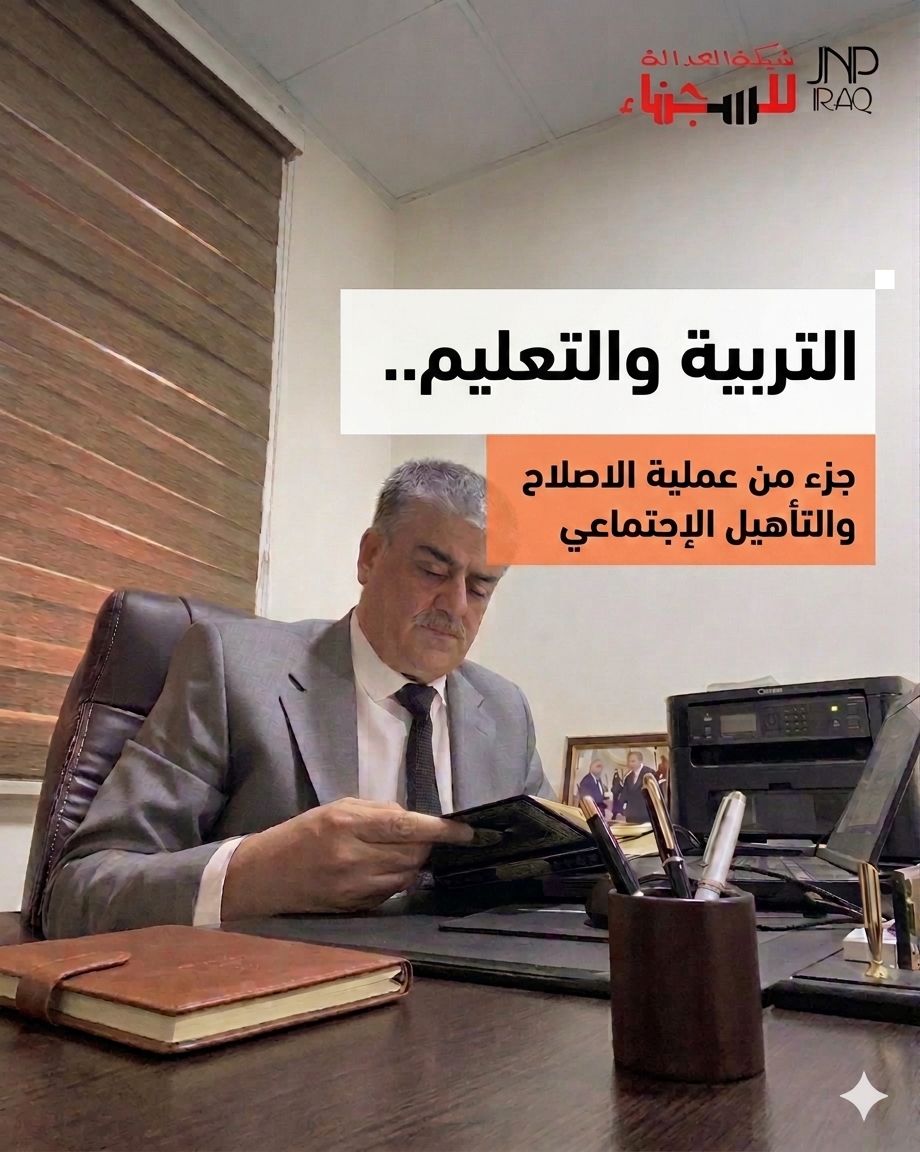
التربية والتعليم …جزء من عملية الاصلاح والتأهيل الاجتماعي
للتربية و التعليم دور مهم جدآ في بناء المجتمعات المتحضرة و بناء الاجيال التي تتخصص في المجالات المتعددة في الحياة، في الطب و في الهندسة و القانون و الفنون و سائر العلوم الاجتماعية الاخرى ، بحيث اصبحت التربية و التعليم مقياسآ لمعرفة مدى تقدم و تطور المجتمعات ، و لهذه الاسباب تعتبر التربية و التعليم جانبآ مهما جدآ في البرامج الاصلاحية و التأهيلية و إعادة الاندماج المجتمعي للمتورطين في ارتكاب الجرائم ، حيث ان السجون و الاصلاحيات من خلال الباحثين الاجتماعيين العاملين في تلك المؤسسات يضعون ملف التربية و التعليم ضمن اولويات البرامج الاصلاحية عند اعادة تأهيل المنحرفين من المحكومين ليتم اعادة بناءهم و اعادتهم للمجتمع كعنصر مفيد و فعال .
وقد أطلقت وزارة العدل العراقية و وزارة العمل و الشؤون الاجتماعية في اقليم كوردستان العراق، بالتعاون مع وزارتي التربية والتعليم العالي، برامج نوعية تهدف إلى محو الأمية و اكمال الدراسة، وتطبيق طريقة التعليم المسرّع، إضافة إلى تعزيز التعليم المهني والأكاديمي داخل المؤسسات الإصلاحية، بما يسهم في بناء قدرات النزلاء وتمكينهم من العودة إلى المجتمع بصورة إيجابية.
قراءة في الواقع والتحديات
ورغم هذه الجهود الرسمية، لا يزال الواقع العملي يواجه تحديات متعددة تتعلق بالبنية التحتية، ونقص الكوادر التعليمية، وضعف المناهج، إضافة إلى تفاوت مستوى
تطبيق هذه البرامج بين المؤسسات الإصلاحية في العراق.
مقابلة خاصة: رؤية من الميدان
وفي هذا السياق، تبرز أهمية الحديث الميداني مع المختصين في هذا الملف، حيث تناولنا في الحلقة الثالثة من سلسلتنا الحوارية مع الحقوقي شوان صابر مصطفى / رئيس مجلس إدارة شبكة العدالة للسجناء في العراق واقع التعليم داخل السجون والإصلاحيات، وأهم التحديات التي تواجهه، إضافة إلى أهم المقترحات والحلول الممكنة ولقد قمنا بسؤاله في هذا الخصوص.
ما هو دور التربية والتعليم في تنفيذ البرامج الإصلاحية داخل المؤسسات السجنية في العراق؟ وما أبرز التحديات والتوصيات في هذا المجال؟
ج/يُعدّ التعليم من أهم أدوات برنامج الإصلاح وإعادة التأهيل داخل المؤسسات السجنية و الاصلاحية، لكن واقعه يختلف بين إقليم كردستان وباقي مناطق العراق
في إقليم كردستان، بشكل عام ، هناك اهتمام نسبي أكبر، ويوجد نوعان من التعليم:
1- التعليم الاعتيادي (خارج السجون) .. و هي الدراسة العادية و مدتها سنة كاملة لكل عام دراسي او لكل مرحلة دراسية إبتدآ من المرحلة الابتدائية و انتهاءآ بالدراسة في الجامعة .
2- التعليم السريع ( المُسَرع ) داخل الإصلاحيات ( لأن في الاقليم لا توجد مؤسسات بإسم السجون )، والذي يتيح للطالب اجتياز سنة دراسية خلال ستة أشهر. هذا النظام قد يكون مناسبًا للبالغين، لكنه يخلق مشكلة حقيقية للأحداث، إذ قد يُكمل الحدث دراسته بعمر مبكر (مثل 16 سنة) دون أن يتمكن من دخول الجامعة بسبب شرط العمر، مما يفقد التعليم جدواه.
أما في باقي مناطق العراق الاخرى، فالوضع يواجه تحديات أكثر، حيث تعاني العديد من السجون من غياب المدارس أصلًا، أو ضعف شديد في البنية التحتية، وغالبًا ما تكون الصفوف مجرد غرف بسيطة أو حتى كرفانات في بعض المواقع، دون توفر بيئة تعليمية مناسبة.
:التحديات الأساسية
عدم ملاءمة بعض الأنظمة التعليمية للفئات العمرية و كلاسيكتها*
غياب ربط التعليم بتخفيف العقوبة ( العقوبات البديلة )*
نقص الكوادر التدريسية والمناهج*
ضعف التجهيزات والبنية التحتية ( القاعات و المختبرات و الاجهزة و وسائل الايضاح )*
غياب برامج فعالة لمحو الأمية*
:نماذج إيجابية
:رغم التحديات التي ذكرت آنفا ، هناك تجارب ناجحة تؤكد إمكانية التطوير
في إحدى إصلاحيات بغداد، تم التعاون مع منظمة غير حكومية عضوة في شبكة العدالة للسجناء ( منظمة المنقذ ) لتوفير أساتذة في عدد من المواد ( الكيمياء والإنجليزية والرياضيات و …الخ ) لقرابة 20 طالبًا، ونجح معظمهم بعد البرنامج .
وفي أربيل، تمكنت إحدى المحكومات من إكمال دراستها في معهد أهلي وتحقيق المرتبة الأولى، كما أكمل عدد من المحكومين بعقوبة الإعدام دراساتهم العليا، رغم عدم تخفيف أحكامهم حتى الآن، لكنهم ما زالوا يتمتعون بحق التعليم كحق أساسي.
و ايضا في محافظة البصرة قامت مديرية السجن بعمل و جهد رائعين في سبيل الحصول على الرحلات الدرسية و هذا دليل على حرص الادارات السجنية في بذل ما يمكن بذله من جهد لضمان الحق في التعليم .
:دور الإدارات السجنية
هناك إدارات سجنية تبذل جهودًا واضحة و الحقيقة غالبية الادارات السجنية، وتتعاون مع المنظمات غير الحكومية لتوفير التعليم و ما يلزم لسد النقص ، رغم وجود تحديات اقتصادية وقانونية وأمنية. بشكل عام، هناك رغبة حقيقية في دعم النزلاء لإكمال دراستهم. من قبل الادارات السجنية و يبدون كافة التسهيلات و يوفرون ما يستطيعون من امكانيات .
:أهمية التعليم داخل السجون
:التعليم لا يقتصر على الجانب الأكاديمي فقط، بل يساهم في
تقليل الاحتكاك بين النزلاء وإثارة المشاكل بينهم .1
١- خلق بيئة أكثر استقرارًا داخل المؤسسات الإصلاحية من خلال قضاء الاوقات في الدراسة
٣- تساعد على خفظ معدلات الاصابة بالحالات النفسية و العصبية
٤- تساعد في حل مشكلة بعض الامراض التي لها علاقة بالمفاصل و الحركة و التشميس
:أبرز التوصيات
١- إنشاء مدرسة في كل سجن وإصلاحية تتناسب مع عدد المحكومين فيهما
٢-توفير الكوادر والمناهج وجميع المستلزمات التعليمية و المعينات و وسائل الايضاح
٣- إقرار قانون العقوبات البديلة وربط التعليم بتخفيف الحكم كبرنامج تأهيلي و تشجيعي
٤-تقديم حوافز مالية وتشجيعية للنزلاء
٥- إطلاق برامج لمحو الأمية في المواقع التي تتطلب ذلك
٦- عقد شراكات مع الجامعات لتخصيص مقاعد دراسية تشجيعية للمحكومين
٧- تعميم التعليم على جميع الفئات دون استثناء
:الخلاصة
على الرغم من اهمية التعليم و التربية من ناحية كونها عنصرآ مهما في البرامج الاصلاحية و التأهيلية ، و لما لها من فوائد اخرى من الناحية الصحية و الامنية ، و على الرغم من تأكيد الادارات السجنية على استعدادهم لإبداء التعاون و المساعدة في انجاح هذا الامر ، الا اننا لا نزال نرى ان وجود التعليم في عموم السجون و الاصلاحيات في العراق شكليا و تفتقر الى الجدية و ذلك من خلال الوقوف على نسبة المسجلين في المدارس التي لا تصل الى (1%) في عموم السجون و الاصلاحيات في العراق و هذا يؤكد تقييمنا لملف التعليم في السجون ، لذا نهيب بالوزارات المعنية بإدارة السجون ايلاء الاهتمام المناسب لهذا الملف الا و هو ( التربية و التعليم في السجون و الاصلاحيات في العراق ) .

 Arabic
  English