
Phone: 0751-402-9131
Email: info@jnpiraq.info
Address: Iraq-Erbil

English/Arabic
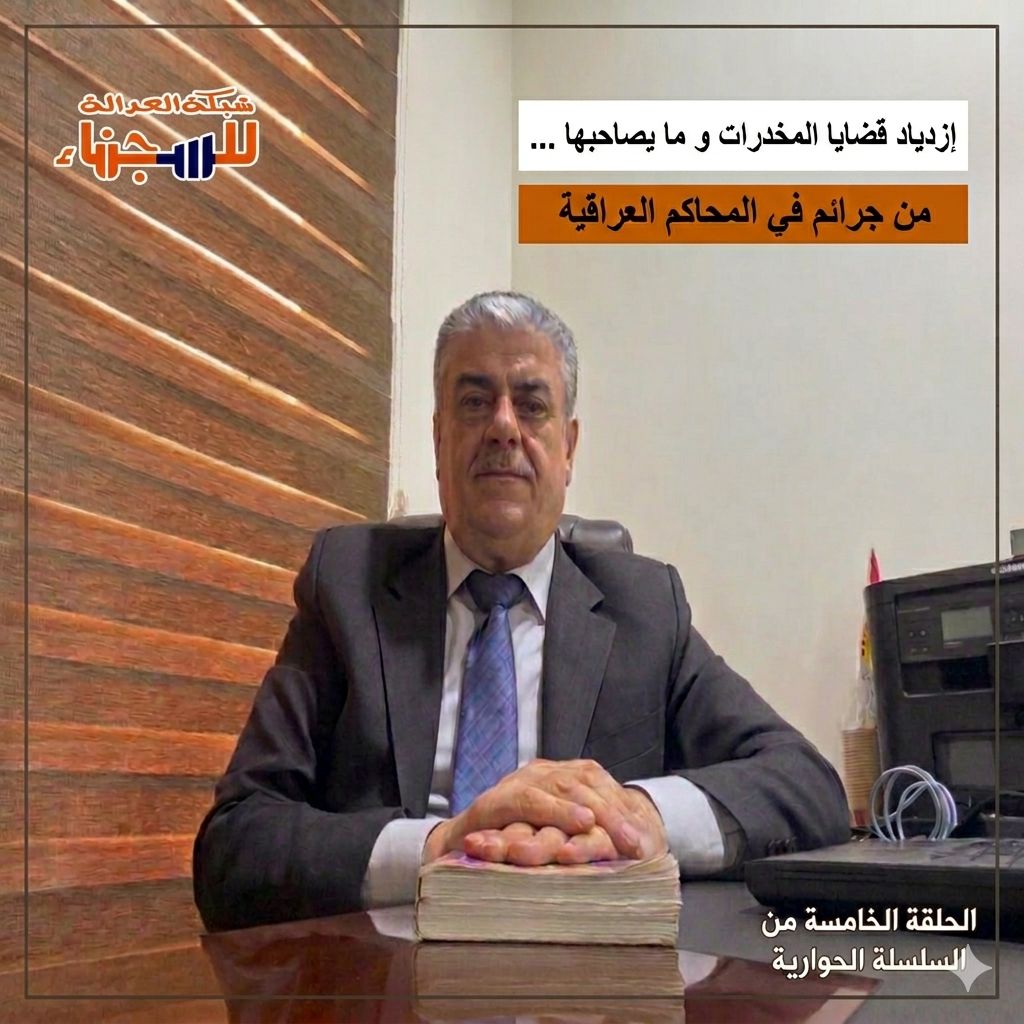
As part of the dialogue series conducted by Justice Network for the Prisoners , the fifth episode featured the Chairman of the Network’s Board of Directors, human rights activist Shwan Sabir Mustafa. This dialogue series continued with a discussion of one of the most prominent issues facing Iraqi society today: drug-related problems.
The interview addressed the reality of this phenomenon from various legal and social perspectives, on 18 May 2026.
First question: How do you view the increase in the number of drug-related cases in the courts?
Answer:
Over the past ten years, we have observed a noticeable increase in the number of drug-related cases brought before courts in Iraq. These crimes are no longer confined to a specific group; they now include men, women, and juveniles from all social, economic, and educational backgrounds. Furthermore, this phenomenon is not only local but also involves foreigners, including residents, refugees, or visitors.
Through periodic visits to prisons and Reformatories , it has become evident that the proportion of juveniles involved in these crimes is rising, including students and workers. In addition, the variety of drugs, their spread in different forms and varying prices, and the continued smuggling of drugs into penitentiary institutions despite security measures all reflect the alarming and growing severity of the problem.
Second question: What are the legal provisions addressing drug issues in Iraq and the Kurdistan Region?
Answer:
In Iraq, drug and psychotropic substance offences are regulated by Federal Law No. (50) of 2017. It imposes severe penalties, including execution or life imprisonment for traffickers, manufacturers, or promoters, along with heavy financial fines, with recidivism considered an aggravating circumstance warranting harsher punishment.
Conversely, the law distinguishes between traffickers and addicts in terms of judicial and legal procedures. Article (39) provides for the possibility of placing an addict in specialized health institutions for treatment instead of a custodial sentence. For this reason, the President of the Supreme Judicial Council of Iraq issued a directive on 29 September 2024 to all Courts of Appeal and the Public Prosecution, instructing competent courts to activate the provisions of Article (39) of the Narcotic Drugs and Psychotropic Substances Law No. 50 of 2017 instead of Article (33) of the aforementioned law, and to commit those proven to be addicted to drugs or psychotropic substances to one of the designated health institutions instead of sentencing them to detention or imprisonment.
In the Kurdistan Region, the Counter-Narcotics and Psychotropic Substances Law No. (1) of 2020 applies, addressing the same offences within a legal framework specific to the Region.
Third question: What are your proposals to address the drug problem?
Answer:
To address this escalating phenomenon, we recommend a set of measures, including:
-
Intensifying efforts by the Ministries of Interior in both governments to reach the sources of drug trafficking.
-
Tightening control over the circulation and sale of narcotic-classified pharmaceuticals in pharmacies and hospitals.
-
Imposing strict controls on prisoner visits to prevent drug smuggling.
-
Strengthening supervision of staff working in penitentiary institutions and anyone associated with entering them.
-
Launching community awareness campaigns through the media and social platforms about the dangers of addiction.
-
Conducting field studies to understand the real causes of the spread of addiction and drug sources.
-
Calling upon the Judiciary Council in the Kurdistan Region to adopt the experience of activating Article (39) concerning the treatment of addicts instead of punishing them, following the federal experiment.
ضمن سلسلة الحوارات الخاصة التي تجريها شبكة العدالة للسجناء، جاءت الحلقة الخامسة مع رئيس مجلس إدارة الشبكة، الحقوقي شوان صابر مصطفى، حيث تم استكمال هذه السلسلة الحوارية عبر مناقشة واحدة من أبرز القضايا التي تواجه المجتمع العراقي اليوم، وهي قضايا المخدرات.
وقد تناولت المقابلة واقع هذه الظاهرة من مختلف جوانبها القانونية والاجتماعية، وذلك بتاريخ 18 أيار 2026.
⸻
السؤال الأول: كيف تنظرون إلى ازدياد عدد القضايا المتعلقة بالمخدرات في المحاكم؟
:الإجابة
نلاحظ في السنوات العشر الأخيرة ازديادًا ملحوظًا في عدد القضايا المتعلقة بالمخدرات المعروضة أمام المحاكم في العراق، حيث لم تعد هذه الجرائم مقتصرة على فئة معينة، بل شملت الرجال والنساء والأحداث، ومن مختلف المستويات الاجتماعية والاقتصادية والتعليمية. كما أن هذه الظاهرة لم تعد محلية فقط، بل تضم أيضًا أجانب من المقيمين أو اللاجئين أو الزائرين.
ومن خلال الزيارات الدورية للسجون والإصلاحيات، تبين ارتفاع نسبة الأحداث المتورطين في هذه الجرائم، بمن فيهم الطلبة والعاملون. كما أن تنوع أنواع المخدرات وانتشارها بأشكال مختلفة وأسعار متفاوتة، إلى جانب استمرار تسريبها إلى داخل المؤسسات السجنية رغم الإجراءات الأمنية، يعكس تفاقم المشكلة بشكل مقلق ومتزايد.
⸻
السؤال الثاني: ما هي المواد القانونية التي تعالج قضايا المخدرات في العراق وإقليم كوردستان؟
:الإجابة
في العراق، ينظم قانون المخدرات والمؤثرات العقلية رقم (50) لسنة 2017 (اتحادي) الجرائم المتعلقة بالمخدرات، حيث ينص على عقوبات مشددة تصل إلى الإعدام أو السجن المؤبد بحق المتاجرين أو المصنعين أو المروجين، إضافة إلى فرض غرامات مالية كبيرة، مع اعتبار العود الى الجريمة ظرفا مشددا لتشديد العقوبة .
وفي المقابل، يفرق القانون بين التاجر والمدمن من حيث الاجراءات القضائية والقانونية المتخذة بحقهم ، حيث نصت المادة (39) على إمكانية إيداع المدمن في مؤسسات صحية متخصصة للعلاج بدلًا من العقوبة السجنية،و لهذا السبب فام السيد رئيس مجلس القضاء الاعلى في العـــــراق بتاريخ ( 29 / 9 / 2024 ) تعميما الى رئاسات محاكم الاستئناف كافة و الى رئاسة الادعام العام كتابآ الى كافة المحاكم المختصة لغرض تفعيل احكام المادة ( 39 ) من قانون المخدرات و المؤثرات العقلية رقم 50 لسنة 2017 بدلا من المادة ( 33 ) من القانون المذكور انفا و ايداع من يثبت ادمانه على المخدرات و المؤثرات العقلية في احدى المؤسسات الصحية المذكورة بدلا من الحكم بالحبس او السجن
.أما في إقليم كوردستان، فيطبق قانون مكافحة المخدرات والمؤثرات العقلية رقم (1) لسنة 2020، والذي يعالج الجرائم ذاتها ضمن إطار قانوني خاص بالإقليم
⸻
السؤال الثالث: ما هي مقترحاتكم لمعالجة مشكلة المخدرات؟
:الإجابة
:لمعالجة هذه الظاهرة المتفاقمة، نوصي بجملة من الإجراءات، منها
١-تكثيف جهود وزارة الداخلية في الحكومتين للوصول إلى مصادر تهريب المخدرات
٢- تشديد الرقابة على تداول وبيع الأدوية المصنفة كمخدرة في الصيدليات والمستشفيات
٣- فرض رقابة صارمة على زيارات السجناء لمنع تهريب المواد المخدرة
٤- تعزيز الرقابة على العاملين في المؤسسات السجنية وكل من له صلة بدخولها
٥- إطلاق حملات توعية مجتمعية عبر الإعلام ووسائل التواصل حول مخاطر الإدمان
٦- إجراء دراسات ميدانية لفهم الأسباب الحقيقية لانتشار الإدمان ومصادر المخدرات
٧- دعوة مجلس القضاء في إقليم كوردستان لتبني تجربة تفعيل المادة (39) الخاصة بعلاج المدمنين بدل معاقبتهم، أسوة بالتجربة الاتحادية

 English
  Arabic